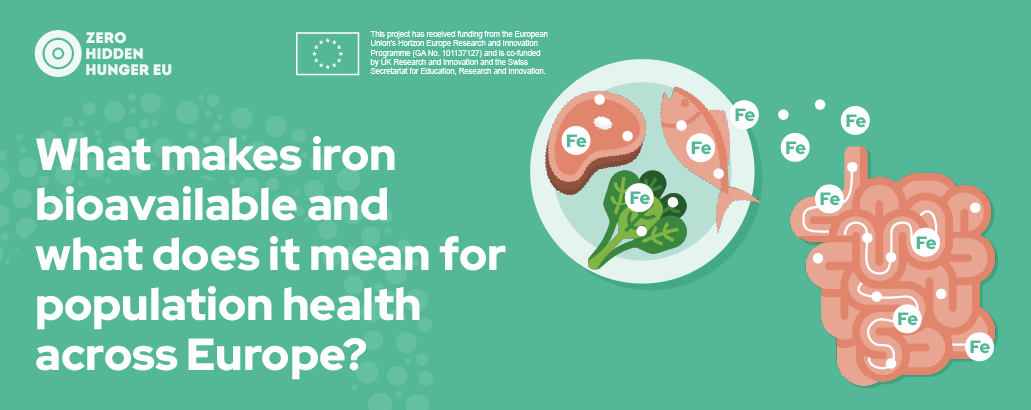
Globally, about one fifth of the world’s population is regarded as iron deficient. While iron deficiency can result from many, often multifactorial, causes, a low dietary intake relative to our needs is a common cause. Iron is a critical mineral for growth and development growth and development and comes from both animal and plant foods. While meat provides highly absorbable iron, a large share of total iron intake in Europe comes from less easily absorbed plant-based foods such as cereals and vegetables. Therefore, we must carefully consider how we can improve the sustainability of our food choices without negatively affecting our iron status.
Why iron matters?
Our bodies utilise iron to carry out essential functions such as oxygen transport in the blood and muscles, supporting healthy growth and maintenance. Because of its importance in physical and cognitive development, iron requirements vary across age and sex groups to account for different physiological requirements across the life cycle. Adequate iron status is especially critical among infants, children, adolescents and pregnant women.
The term iron deficiency refers to the state where there’s not enough iron in your body. Iron deficiency anaemia is a more serious condition whereby the stores are so low that the body struggles to carry out physiological functions such as making healthy red blood cells. Iron deficiency anaemia often causes fatigue and muscle weakness, affecting even day to day activities.
What is bioavailable iron?
Bioavailable iron refers to the proportion of total iron which is available for the body to absorb. It depends on two major factors:
1) the type of iron which you consume
2) other dietary components you consume alongside iron.
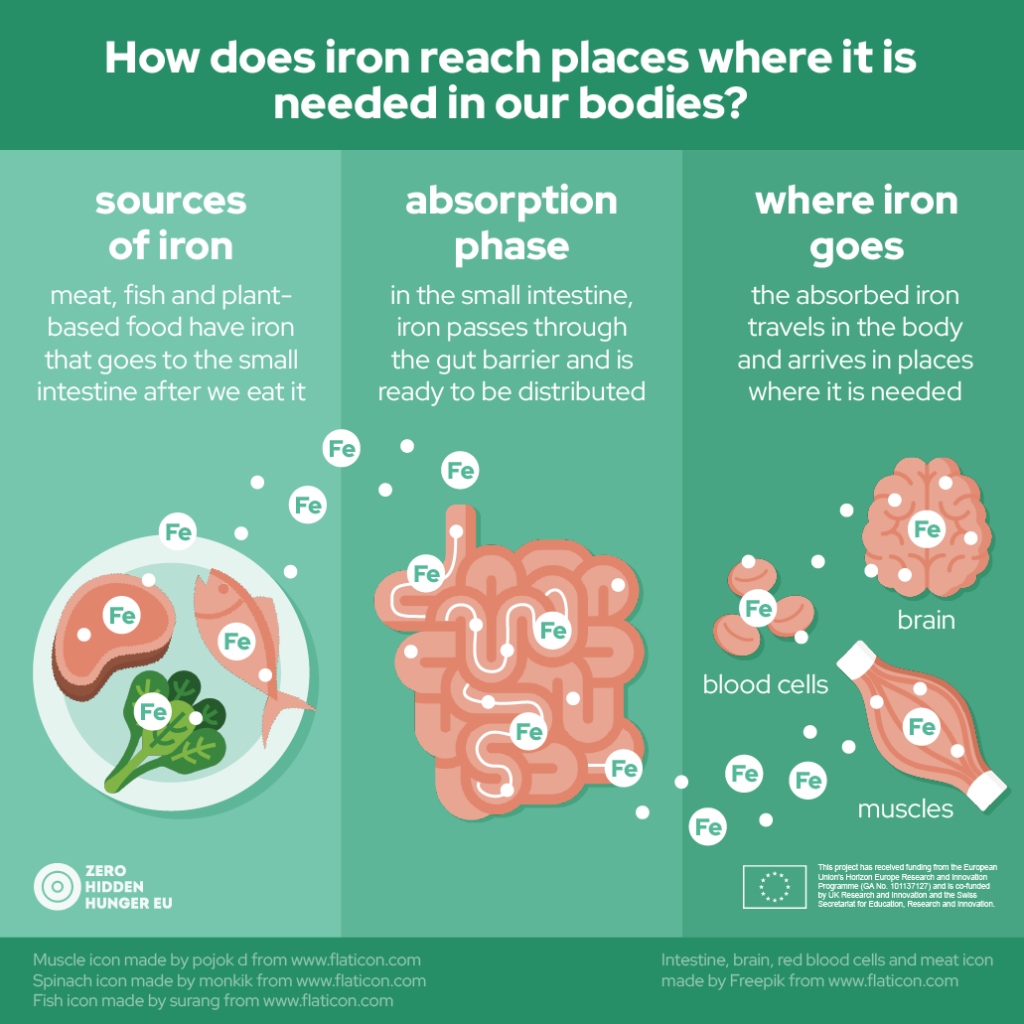
Iron is available in two forms; haem iron which is sourced from meat (and fish in smaller quantities), and non-haem iron which is available in all iron containing foods. The amount of total iron in meat which is haem iron depends on the type of meat you consume, ranging from ~26% for poultry to 65% for beef. Haem iron is most bioavailable: 15-35% of it is absorbable, compared to non-haem iron (5-12% absorbable).
The reason non-haem iron is less readily absorbed than haem iron is that it must be converted before it can be absorbed in the small intestine, where it enters the bloodstream and is circulated around the body. During this conversion process non-haem is exposed to other dietary components that bind to it, blocking its absorption in the small intestine. The key components in the diet which can inhibit iron bioavailability are phytates (found in foods such as legumes, whole grains, and nuts and seeds), certain polyphenols (found in foods and drinks like tea, coffee, and some fruits) and calcium. However, these same foods are also important for health, as they provide fibre and other beneficial nutrients. Rather than limiting them, it is more useful to think about how we combine foods at mealtimes to maximise absorption of iron. For example, vitamin C found in fruits and vegetables can improve the absorption of iron from plant foods. Simple combinations such as adding peppers or citrus fruit to a meal with beans or lentils or including a glass of orange juice with a meal, can make a difference. Including small amounts of meat or fish in a meal can also enhance the absorption of iron from plant-based foods. It can also help to consider when certain foods and drinks are consumed. For example, drinking tea or coffee with meals can reduce iron absorption, so having them between meals instead may help improve absorption of iron .
It is important to note that while what we eat determines how much of the iron we consume can be absorbed (i.e., is bioavailable), it is our individual iron stores which dictate how much iron is actually absorbed: the lower your iron stores the more bioavailable iron is absorbed by the body.
Within Zero Hidden Hunger EU
It is important to understand current intakes of bioavailable iron within European populations so that we can then predict how the introduction of more plant-based foods into our diets may alter our intake of bioavailable iron. Within the Zero Hidden Hunger EU project we are taking the following steps to achieve this:
- Identify and update important data needed to calculate intake of bioavailable iron, this includes the phytate and polyphenol content of widely consumed foods
- Update food composition tables with meat specific haem iron content based on chemical analyses rather than arbitrary 40:60 haem:non-haem iron estimates
- Estimate intake of bioavailable iron across European population groups using defined algorithms
- Model future plant-forward dietary scenarios to understand how intake of bioavailable iron may be affected
The Zero Hidden Hunger EU project has brought a group of experts across Europe together allowing us to accurately estimate the bioavailability of iron in current and future diets. This will be essential when devising sustainable public health strategies as iron remains a nutrient of concern.
Author: Grace Bennet
Grace Bennett is a research scientist within the Food and Nutrition National Bioscience Research Infrastructure at Quadram Institute Bioscience. She holds a PhD in nutrition and public health from University College Dublin. Her background centres around dietary assessment within underrepresented subgroups of the population and strategies to address data reuse and mapping. Her work within the Zero Hidden Hunger EU project focuses on assessing absorption of iron and zinc from current EU and UK dietary patterns and consideration of how absorption may change as we shift to plant-forward diets.