
Micronutrients are nutrients required in small amounts every day, including vitamins (e.g. vitamin A, vitamin D and folate) and minerals (e.g. calcium, iron and zinc), which support normal physiological function, growth and development. Across the globe, pregnant women are one of the population groups most vulnerable to micronutrient deficiencies. Pregnancy brings sweeping physiological changes for both mother and baby, and since the developing baby also relies on the mother’s nutrient supply, her micronutrient needs rise above what is required for a typical healthy lifestyle. Entering pregnancy with adequate micronutrient stores is therefore essential, as deficiencies present before conception can affect the baby’s development from the earliest stage. For the baby, the “first 1,000 days of life” – spanning from conception to a child’s second birthday – is a critical period for health. Optimal nutritional status and healthy dietary intakes during this time can have long-lasting positive impacts on life.
What we know about the prevalence of micronutrient deficiencies in pregnancy?
Two in three non-pregnant women of reproductive age globally suffer from at least one micronutrient deficiency (iron, zinc or folate). Every region of the world is affected, including high-income countries, however some rates are higher in low-resource settings. This figure is thought to be higher for pregnant women, however, limited data exist as pregnant women are typically not included or are underrepresented in large population surveys.
In Europe, we know that around half of all pregnant women enter pregnancy with low iron stores (defined by a blood sample ferritin concentration < 30 µg/L). Of these, 10-32% are classified as iron deficient (ferritin < 15 µg/L). In areas of the world such as Africa, rates of iron deficiency are reported to be higher, for example, 19–61% of pregnant women in Ethiopia, Kenya, Nigeria and South Africa had iron deficiency, as well as deficiencies in vitamin A (ranging from 21–48%), iodine (87%), zinc (46–76%) and folate (3–12%) showing that more than one micronutrient can be an issue at the same time.
The iodine status of pregnant women in most European countries is classified as insufficient. For example, in a high-income country like Ireland, Zero Hidden Hunger EU researcher Dr Áine Hennessy found that pregnant women have mild to moderate iodine deficiency. Ireland does not have a mandatory salt iodisation policy, however, some other countries with salt iodisation policies were still below the recommended threshold for sufficiency, demonstrating the challenge of meeting iodine requirements in pregnancy through diet.
Poor-quality diets with low levels of nutritious foods like fruits and vegetables, for example a diet based predominantly on staple carbohydrate foods, is one risk factor for low micronutrient intakes. However, for vitamin D, the picture is a little different. The body produces most of its vitamin D when the skin is exposed to sunlight. People with limited sun exposure, darker skin, as well as those who wear clothing that covers most of the skin, may have a higher risk of vitamin D deficiency. Globally, around half of pregnant women have sub-optimal levels of vitamin D (defined by a blood sample vitamin D concentration <50 nmol/L). Pregnant women in the Middle East and South Asia have some of the lowest status, and ethnic minority groups are at higher risk. This was demonstrated in a study in Ireland led by Zero Hidden Hunger EU co-director Professor Mairead Kiely, where 17% of pregnant women had low vitamin D status, but this jumped to 49% among ethnic minorities [link to open access.
Why is this topic important?
The developing baby is dependent on the maternal supply of micronutrients, especially in early pregnancy. This means that the nutritional status of the mother entering pregnancy can impact the baby’s development – for example, adequate folate status around the time of conception helps protect against neural tube defects. Good micronutrient status throughout pregnancy helps reduce the risk of complications such as high blood pressure disorders, preterm delivery and low birth weight. This is also a critical period for the baby’s developing brain, where micronutrients such as iron, iodine, zinc, copper, selenium, vitamin A, choline and folate are required for building connections between brain cells (synapse formation), insulating nerve pathways (myelination), and other developmental processes, particularly in the third trimester of pregnancy and first months of life. There is a generational impact of micronutrient deficiency, where poor maternal nutritional status before and during pregnancy can result in sub-optimal nutritional status in children, and consequences can persist throughout the child’s lifespan.
These are some of the key micronutrients required before and during pregnancy:
| Key micronutrients | Role in pregnancy | Rich dietary sources | EFSA dietary reference value |
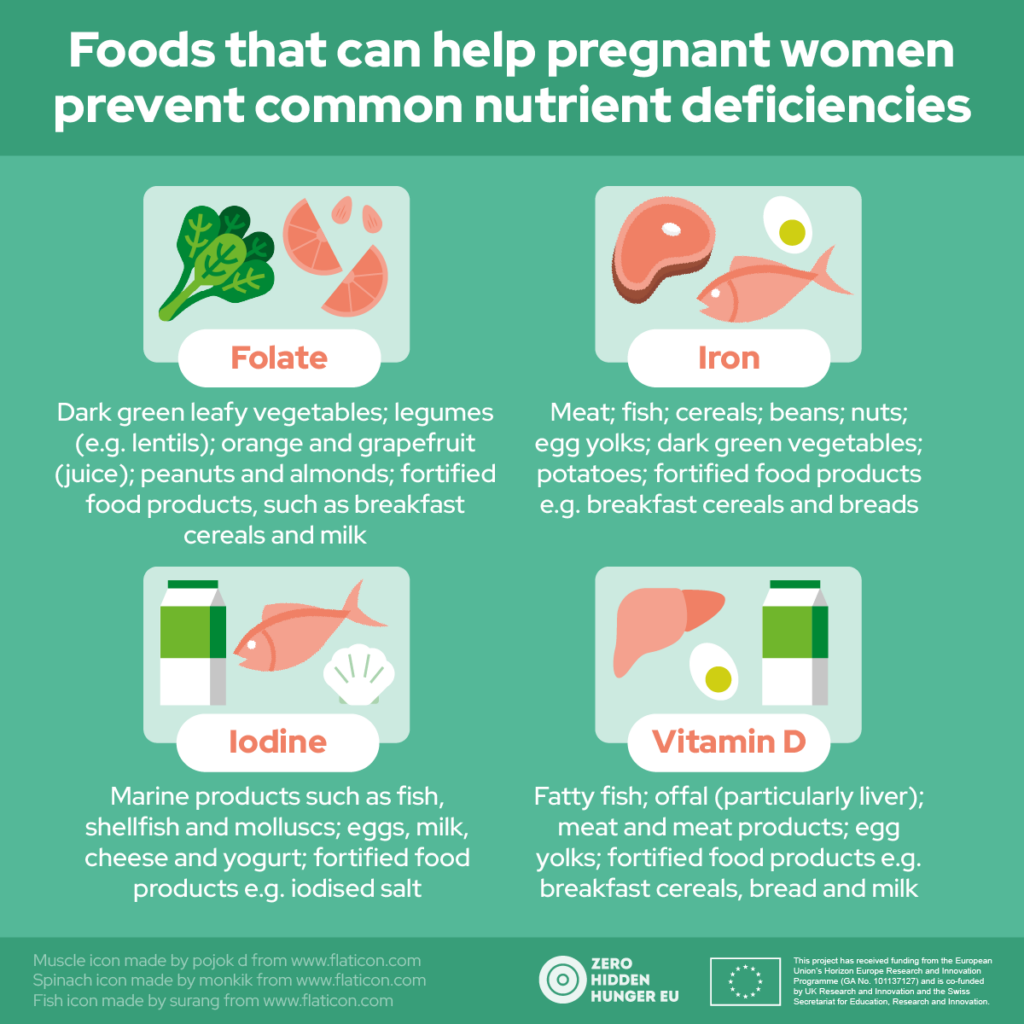
| Folic acid (folate) | Reduces the risk of neural tube defects, such as spina bifida and anencephaly. Supports DNA synthesis and the creation of new cells which are essential for the rapidly growing baby and the placenta. It also supports the production of healthy red blood cells and helps prevent folate-deficiency anaemia during pregnancy. | Dark green leafy vegetables; legumes (e.g. lentils); orange and grapefruit (juice); peanuts and almonds; fortified food products, such as breakfast cereals and milk. | 400 µg pre pregnancy; 600 µg during pregnancy; 500 µg when breastfeeding. |
| Iron | Supports the increase in maternal blood volume and the development of the placenta. It is essential for producing haemoglobin and red blood cells, and helps build the baby’s iron stores, particularly in later pregnancy. Adequate maternal iron stores can protect against iron deficiency anaemia and pregnancy complications. Because iron needs rise, it is beneficial to enter pregnancy with good iron stores, and the body helps compensate by absorbing iron more efficiently as the pregnancy progresses. | Meat; fish; cereals; beans; nuts; egg yolks; dark green vegetables; potatoes; fortified food products e.g. breakfast cereals and breads. Tip: consuming foods rich in vitamin C (e.g. bell peppers) in the same meal can increase the amount of iron absorbed. | 16 mg pre- and during pregnancy |
| Iodine | Supports the production of thyroid hormones, which regulate metabolism and are essential for normal growth and development in both mother and baby. It helps support the baby’s brain and nervous system development, as the baby depends on maternal thyroid hormones during early pregnancy. Adequate iodine can help prevent iodine deficiency disorders which when severe, can impair brain development and cause significant intellectual and developmental disability. | Marine products such as fish, shellfish and molluscs; eggs, milk, cheese and yogurt; fortified food products e.g. iodised salt. | 150 µg pre pregnancy; 200 µg during pregnancy and breastfeeding. |
| Vitamin D | Supports calcium absorption, helping the baby develop healthy bones and teeth and contributes to normal muscle function. Supports the development and normal function of the immune system. Adequate vitamin D status has been linked to a reduced risk of pregnancy complications such as pre-eclampsia, gestational diabetes, preterm birth and low birth weight. | Fatty fish; offal (particularly liver); meat and meat products; egg yolks; fortified food products e.g. breakfast cereals, bread and milk. | 15 µg pre- and during pregnancy |
Vitamin A is an important micronutrient required for healthy immune function and development of the eyes. However, too much of the animal forms of vitamin A have been linked to birth defects. This is known as preformed retinol and is particularly high in foods such as liver and pâté, hence it is recommended that these concentrated sources be minimised or avoided in pregnancy, as well as retinol in supplement form. Vitamin A can be consumed in a healthy way by including foods like eggs, dairy and fortified food products, and good sources of the plant forms of vitamin A e.g. beta-carotene, of which rich sources include yellow, red and green (leafy) vegetables e.g. spinach, carrots, sweet potatoes and red peppers, and yellow fruits e.g. mango and apricots.
What can happen in case of micronutrient deficiency during pregnancy?
Micronutrient deficiency in pregnancy is linked to a wide range of adverse outcomes:
- Folate deficiency at the beginning of a pregnancy increases the risk of neural tube defects. These congenital conditions, including spina bifida and anencephaly, result from the neural tube not closing completely during early development. This occurs approximately 3-4 weeks after conception, often before a person knows that they are pregnant. That’s why organisations like the European Food Safety Authority (EFSA) recommend folic acid for anyone who could become pregnant.
- Iron deficiency is one of the most common micronutrient deficiencies globally, and it is the most common cause of nutritional anaemia. Females are among the highest risk groups due to menstruation and increased requirements during pregnancy. A recent analysis in Ireland by Zero Hidden Hunger EU researcher Dr. Elaine McCarthy showed that deficiency rates increase dramatically as pregnancy progresses. The study found that 5% of pregnant women had iron deficiency (ferritin <15 µg/L) at 15 weeks, which increased to 14% by 20 weeks and 51% by 33 weeks. This can progress to iron deficiency anaemia, a condition in which a lack of iron in the body leads to a lower number of red blood cells. Consequences of low iron include increased risk of preterm birth, low birth weight, having a baby born with iron deficiency, and adverse effects on brain development leading to poorer intelligence, cognition and behaviour.
- Low maternal supply of iodine affects the production of foetal thyroid hormones that are key for neurological development. Although the consequences of severe iodine deficiency are well established, including severe forms of physical and intellectual disability, mild-to-moderate iodine deficiency has been associated with subtly lower cognitive outcomes in children and is an ongoing area of research.
- Vitamin D deficiency during pregnancy is linked to increased risk of preterm birth, low birth weight, recurrent miscarriage, and gestational diabetes mellitus (a form of high blood sugar that develops during pregnancy in women who did not have diabetes beforehand).
What is Zero Hidden Hunger EU is doing on this topic?
The ZHH EU project aims to analyse the diets of pregnant women using a consistent analysis method, which will allow direct comparisons to be made across countries. We will describe micronutrient intakes and assess the adequacy of these intakes using nutrient recommendations, to determine the proportion of the population with inadequate intakes. Blood and urine samples collected as part of the IMproved PRegnancy Outcomes by Early Detection (IMPROvED) study will be analysed for micronutrient status, which will provide estimates of micronutrient deficiency in pregnancy in several European countries. Finally, the project will also investigate a potential new indicator of iodine status, which could support better screening during pregnancy in the future.

Author: dr Ursula Leonard
Dr Ursula Leonard is a postdoctoral researcher at the Cork Centre for Vitamin D and Nutrition Research, School of Food and Nutritional Sciences at University College Cork, Ireland. She holds a PhD in Nutritional Sciences, where she explored the impact of a transition to sustainable diets on micronutrient intakes and status. Her work within the Zero Hidden Hunger EU project focuses on the analysis of micronutrient intakes in diets across Europe.